Blackout
On the Come UpBlackout is a gossip blog whose post of Brianna Jackson’s song helps carry her work from a local performance into broad online attention. The post brings the song to thousands of listeners, but presents Brianna through a sensational headline about her father rather than by name—an early example of how publicity can amplify her voice while narrowing the story told about her.
Identity and Editorial Approach
Brianna describes Blackout as a blog that trades in gossip about Black celebrities, packaging its coverage as entertainment for readers eager for celebrity news. Her account captures the site’s appeal as well as its invasiveness: she finds it ridiculous, yet admits that it is addictive. The blog’s role in her story is therefore not simply to report on a new rapper; it participates in the attention economy surrounding Black celebrity, where visibility arrives alongside exposure and reduction.
The Post About Brianna’s Song
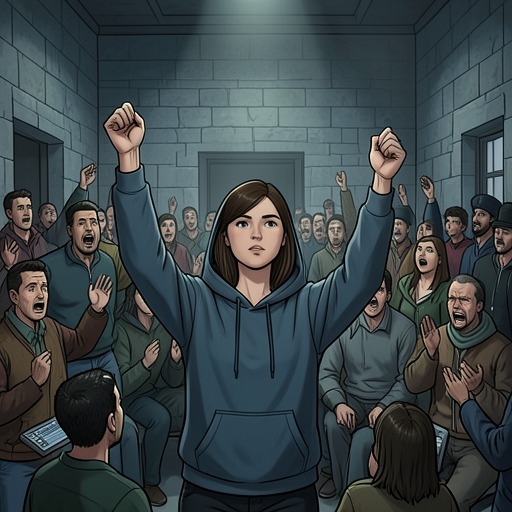
Curtis tells Brianna and Malik that Blackout has posted her song. When Curtis opens the site on his phone, Brianna finds herself on its front page beside a photograph from her performance at The Ring. The headline identifies her as the teenage daughter of the murdered underground rap legend Lawless and declares that she has “killed” listeners with her new music. It omits Brianna’s name, though she observes that it would have fit, and turns her relationship to her father into the principal hook for the story.
Below the photograph and headline, Blackout embeds “On the Come Up” directly from Brianna’s Dat Cloud page. The post thus does more than discuss the song: it provides a route to listen to it. Curtis reports that the track has reached twenty thousand listeners and that Brianna is trending. Brianna connects the sudden exposure to Supreme, recognizing that he kept his promise to help get the song heard. Blackout’s coverage becomes a concrete hinge between her local performance and a much larger audience.
Publicity, Identity, and Consequence
The post’s circulation gives Brianna’s music reach, but the framing makes that reach inseparable from a sensational account of her identity. By foregrounding Lawless’s murder and calling her a legend’s daughter, Blackout draws attention through family history while leaving Brianna unnamed in its headline. Brianna is willing, for the moment, to overlook what she recognizes as sexist treatment because the song is receiving attention; that pragmatic response does not erase the slight but shows the pressure to accept imperfect publicity when access to listeners is at stake.
The blog’s post also anticipates the larger struggle over how others interpret Brianna’s work. Later, news coverage presents “On the Come Up” as a violent track associated with young listeners, while Hype challenges Brianna over lyrics about weapons and police. These moments are not Blackout’s reporting, but they extend the same tension between a song’s growing visibility and public narratives that treat performance as a transparent account of its maker. In contrast, Brianna’s later freestyle insists that she is not a puppet or a clone and refuses to let others define her as either a sellout or a thug. Blackout helps make her visible; the story’s continuing conflict is over whether that visibility can accommodate Brianna as an artist in her own right.